A cassette from Halmstad, a chorus for the world
A student’s cassette copy, a burst of airplay in Minneapolis, and suddenly Roxette were everywhere. Behind those enormous choruses was a duo from Halmstad who turned sharp pop craft and a remarkable voice into some of radio’s most enduring hits.
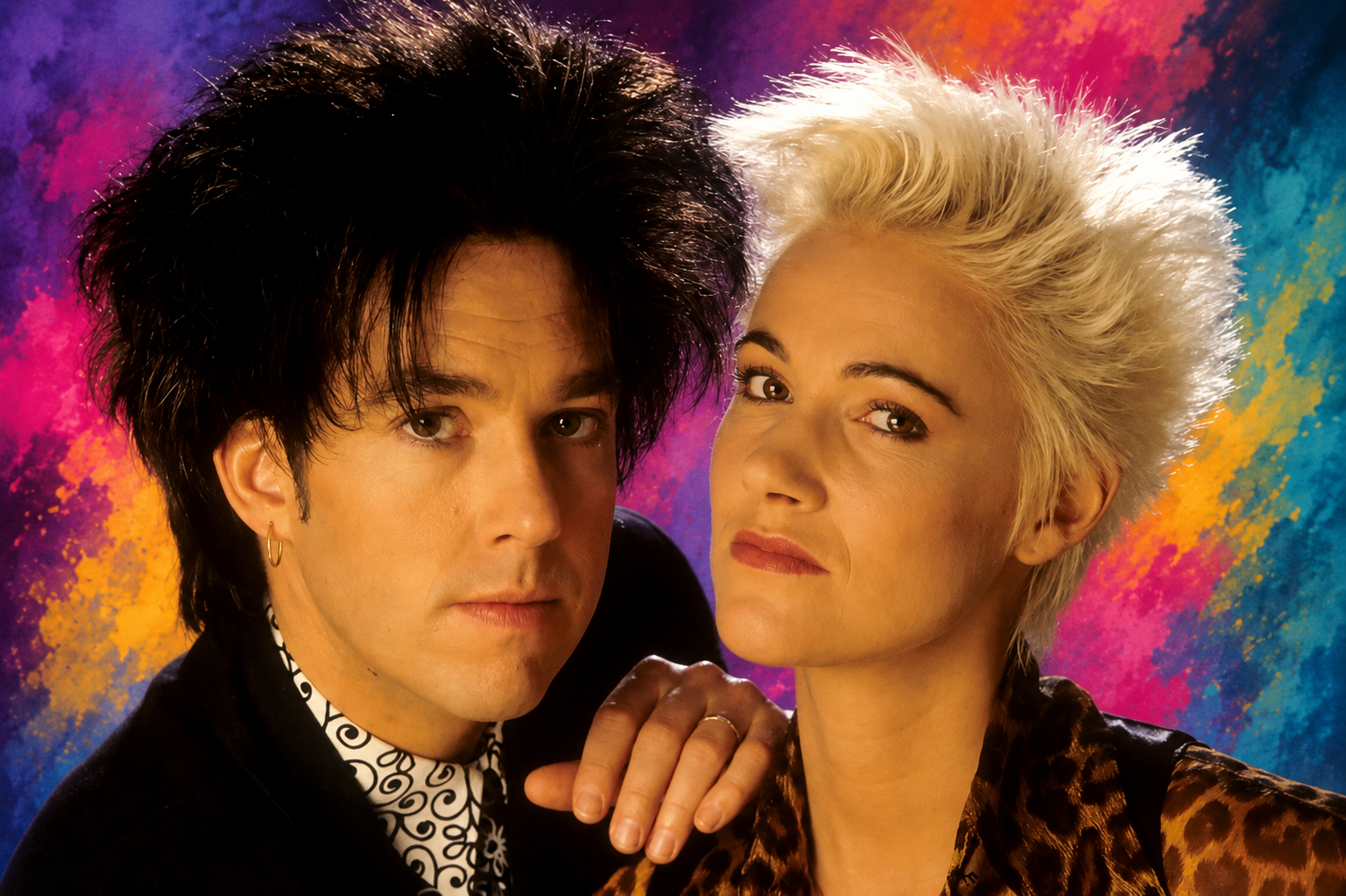
There is something wonderfully unlikely about Roxette. Two musicians from the Swedish coastal town of Halmstad, each with their own musical history, came together and ended up filling radios across the world with songs that felt both polished and deeply human. Their records had the bright lift of pop, the sweep of rock, and those irresistible choruses that seemed built to be sung back at full volume from car seats, kitchen floors, and concert arenas.
At the heart of Roxette was the contrast that made them so memorable: Marie Fredriksson’s powerful, expressive voice and Per Gessle’s gift for melodic hooks that could sound effortless even when they were crafted with great care. Together, they became one of Sweden’s most successful musical exports, but more importantly for classic hits listeners, they made records that still feel alive. Put on It Must Have Been Love, The Look, or Listen to Your Heart, and the room changes. The songs arrive with drama, warmth, and that unmistakable Roxette spark.
Two paths in Halmstad
Before Roxette became a global name, Marie Fredriksson and Per Gessle were already serious about music, though they came to it in different ways. Marie was the youngest of five children and grew up in a household where music was a real presence. She studied at music school, developed a voice that could move from tenderness to thunder, and began singing in local bands. Even early on, there was a sense that she had unusual range not just technically, but emotionally. She could make a lyric sound confessional one moment and defiant the next.
Per, meanwhile, was the classic pop obsessive. He grew up listening closely, soaking up records and learning how songs were put together. He loved melody, structure, and the magic of a great chorus. Before Roxette, he found success with the Swedish band Gyllene Tider, whose energetic pop made them major stars at home. Marie also built a strong solo career in Sweden, earning acclaim for her own recordings.
That is one of the most interesting things about Roxette: this was not a story of two unknowns stumbling into a lucky break. Both artists had already done the hard work. They had paid their dues, developed their instincts, and learned how to connect with an audience. When they joined forces in the mid-1980s, they brought experience as well as chemistry.
The name Roxette itself came from the title of a song by Dr. Feelgood, a small but telling detail. It hinted at the duo’s love of classic rock and pop traditions even as they were creating something sleek and contemporary for their own time.
The moment the world looked up
Roxette’s early records did well in Scandinavia, but their international breakthrough has become one of pop music’s great radio-era stories. In 1988, an American exchange student named Dean Cushman took a copy of Look Sharp! back to the United States and shared it with a radio station in Minneapolis. The station began playing The Look, listeners responded immediately, and what started as a local spark turned into a full-scale international fire.
It is the kind of story radio people love because it says something essential: great songs can travel on pure excitement. No grand launch plan, no carefully staged global campaign at first, just a record that connected.
The Look became Roxette’s first US number one, and suddenly the duo were not simply Swedish stars with overseas potential. They were global hitmakers. Then came Listen to Your Heart, another chart-topper, proving the first success was no fluke. If The Look showed their playful, punchy side, Listen to Your Heart revealed their gift for emotional scale. Marie’s vocal performance on that song still lands with astonishing force.
Then came the song that, for many listeners, sealed Roxette’s place in pop history: It Must Have Been Love. Originally recorded as a Christmas song in Sweden, it was reworked and included on the soundtrack of Pretty Woman. That new version became a worldwide phenomenon. It is one of those rare records that feels intimate and cinematic at once, and Marie sings it with such aching control that every line seems suspended in mid-air.
“It must have been love, but it’s over now” is one of those opening lines that tells you almost everything at once: romance, regret, memory, and the sting of realisation.
By the early 1990s, Roxette were on a remarkable run. Albums such as Look Sharp! and Joyride turned them into one of the defining pop acts on radio worldwide. Joyride itself became another major hit, full of movement and mischief, while songs like Fading Like a Flower (Every Time You Leave) and Dressed for Success strengthened a catalogue that was far deeper than a handful of singles.
The songs that still leap out of the speakers
Every classic hits artist needs more than chart statistics. They need songs that still feel good when they come on unexpectedly between the news, the traffic update, and the next memory from a listener. Roxette have those in abundance.
- The Look – all attitude, rhythm, and pop swagger. It sounds like a song that knows exactly what it is doing.
- Listen to Your Heart – a towering power ballad, carried by Marie Fredriksson’s extraordinary vocal command.
- It Must Have Been Love – wistful, dramatic, and timeless, with a melody that seems to float.
- Joyride – bright, kinetic, and playful, a perfect example of Per Gessle’s hook-writing instincts.
- Dressed for Success – confident and sharp, with that glamorous pop-rock edge Roxette wore so well.
- Fading Like a Flower (Every Time You Leave) – emotional and expansive, one of their finest later-night radio moments.
- Dangerous – sleek and driving, showing their darker, more restless side.
- Spending My Time – one of their most underrated heartbreak performances.
What is striking about these songs is their balance. Roxette could deliver glossy pop without sounding disposable, and they could lean into emotion without becoming heavy-handed. Their records are full of memorable intros, big middle eights, and choruses that arrive exactly when you want them to. That is not accidental. Per Gessle was, and remains, a master craftsman of pop songwriting.
And then there was Marie. Her voice gave Roxette much of their emotional identity. She could sound vulnerable without ever seeming weak, and commanding without losing warmth. Many duos have contrast; few have contrast this effective.
Pop craft with a rock heartbeat
Roxette were often described as a pop duo, and that is true, but it only tells part of the story. Their music drew from rock, new wave, power ballads, and the grand melodic tradition of 1960s and 1970s songwriting. You can hear the influence of classic pop architecture in the way their songs build, release, and hook the listener again just when attention might drift.
Per Gessle’s writing had an international ear. Even when Roxette were rooted in Sweden, their songs were built to travel. The melodies were direct, the choruses universal, and the emotions easy to recognise no matter where you heard them. Marie’s singing gave those songs weight and weather. She could make a polished production feel lived-in.
There was also a visual and theatrical side to Roxette that suited the MTV era without being trapped by it. Their videos had style, but the songs were always strong enough to survive without the images. That is one reason they have lasted on radio. Strip away the fashion, the production gloss, the period details, and the core still holds.
Behind the scenes: stories that make the music feel closer
One of the most charming Roxette stories remains that accidental American breakthrough via a student’s copy of Look Sharp!. It sounds almost impossible now, in an age of algorithms and instant global releases, yet it happened because somebody heard a song and simply had to share it. That is classic radio magic in its purest form.
There are other details that reveal the duo’s character. It Must Have Been Love began life as a seasonal release in Sweden before being reborn for an international audience. That kind of second life is rare, and it says a lot about the strength of the song itself. A great melody can survive reinvention.
Roxette were also tireless performers. Their tours took them across continents, and they built a reputation for delivering songs with real energy on stage. Marie, especially, had that quality the best front people possess: she could make a huge venue feel emotionally direct.
In 2002, Marie Fredriksson was diagnosed with a brain tumour, a devastating moment that changed the course of the duo’s career. Her recovery and eventual return to recording and performing became a story of resilience as much as music. When Roxette returned to the stage and studio, there was understandably a different emotional texture around the band, but also a powerful sense of gratitude from audiences.
Marie passed away in 2019, and her death was felt deeply by fans around the world. Tributes poured in not only because she was part of a successful act, but because her voice had become part of people’s lives. Weddings, breakups, road trips, quiet evenings, first dances, radio singalongs: Roxette had been there for all of it.
Why Roxette still belong on classic hits radio
For classic hits listeners, Roxette offer something especially valuable: familiarity without fatigue. Their best songs are immediately recognisable, but they still carry enough drama, texture, and melodic invention to feel exciting on repeat listens. That is harder to achieve than it sounds.
They also represent a fascinating chapter in international pop history. Roxette proved that a Swedish act could dominate English-language radio around the world long before global pop became quite so borderless. In many ways, they helped pave the way for the modern understanding that a great pop song can come from anywhere and connect everywhere.
On radio, their catalogue works in multiple moods. Need uplift? Joyride and The Look are ready. Need romance and reflection? Listen to Your Heart and It Must Have Been Love step in. Need a song that makes listeners pause for half a second and then sing the next line automatically? Roxette have a long list of those.
Most of all, they matter because they made emotional pop with precision and heart. Per Gessle knew how to build songs people would remember. Marie Fredriksson knew how to make people feel them. That combination is rare, and it is the reason Roxette records still leap out of the speakers decades later.
There is nostalgia in hearing Roxette, certainly. But there is also something more immediate. These songs still move. They still glimmer. They still know how to find the listener at exactly the right moment. For a classic hits station, that is not just history. That is living radio.