A cereal bowl on the carpet, cartoons on the screen — Saturday morning TV in America, 1981
At 7:00 AM, the television was already glowing, the cereal was going soft, and kids across America were hopping between ABC, CBS, and NBC to catch their favourite cartoons. In 1981, Saturday morning was not background noise — it was the happiest appointment viewing of the week.
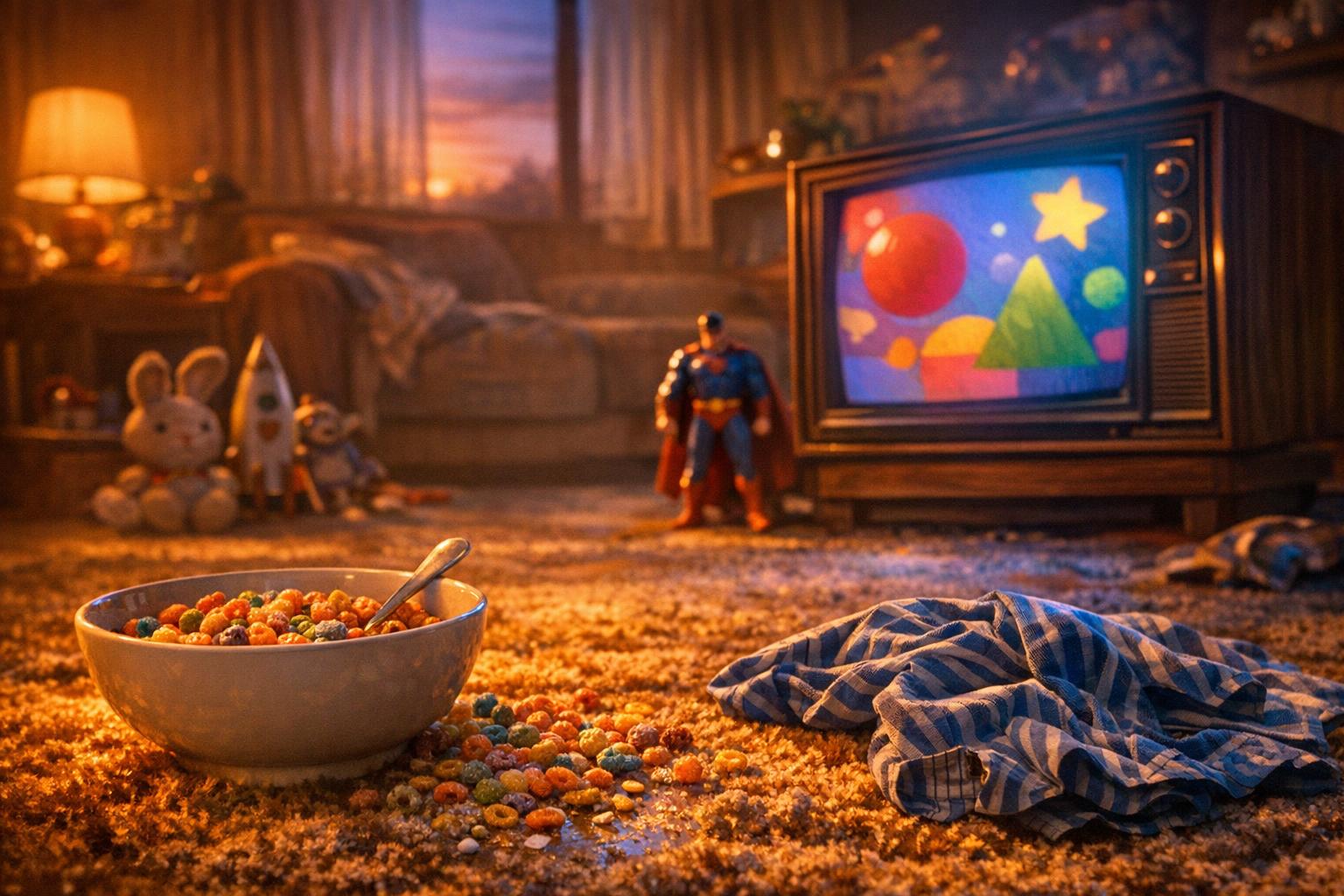
By 7:00 in the morning, the house was still quiet, but the television was already glowing. Pajamas, a spoon clinking against a cereal bowl, and a parade of cartoon heroes, talking animals, and familiar theme tunes — for millions of American kids in 1981, that was the weekly ritual. Saturday morning television was not just something to watch. It was an event.
Long before streaming, on-demand viewing, or hundreds of cable channels, the big three networks — ABC, CBS, and NBC — treated Saturday morning like prime territory. They packed their schedules with bright animation, live-action adventure, comedy, and educational programming, all aimed squarely at young viewers who had been waiting all week for this exact block of television.
And looking back now, it is easy to see why the era still glows so warmly in people’s memories. This was peak “cereal bowl + cartoons + pajamas” television, and 1981 sits right in the heart of it.
Why Saturday morning felt so big
Part of the magic was simple scarcity. There were only a few major broadcast networks, and before cable television became dominant, Saturday morning was one of the few times the entire industry seemed to lean fully into programming for children. For a few hours every weekend, the television belonged to the kids.
The formula was irresistible. Cartoons usually ran from about 7:00 AM until noon, and every break seemed to bring another toy commercial, sugary cereal advertisement, or local station promo. It was bright, noisy, cheerful, and impossible to ignore. Network executives knew exactly what they were doing, too — they competed fiercely for ratings, often using famous characters, recognizable franchises, and toy-friendly concepts to win attention.
For viewers, though, it never felt like strategy. It felt like fun. You knew the opening themes. You knew which channel had your favourites. You knew when to switch over if one show ended and another was starting somewhere else. It was a weekly map of excitement.
ABC brought colour, comedy, and superhero energy
ABC’s 1981 Saturday morning lineup had a lively, fast-moving feel to it. This was a network that understood the appeal of comic-book action, broad comedy, and familiar characters from television and animation.
Superheroes and animated all-stars
Super Friends was one of the crown jewels. For children of the era, seeing Superman, Batman, Wonder Woman, and the rest of the Justice League in animated form felt like opening a giant toy box. The stories were simple, but that was part of the charm. Good and evil were clearly defined, the action was energetic, and the team dynamic made every episode feel larger than life.
Then there was Spider-Man and His Amazing Friends, a huge favourite with young viewers. Pairing Spider-Man with Iceman and Firestar gave the show a playful chemistry that helped it stand out. It had superhero action, yes, but it also had banter, friendship, and a pace that felt perfectly tuned to a Saturday morning audience. For many fans, this was one of the defining cartoon experiences of the early 1980s.
Comedy, familiar names, and a little television crossover
ABC also leaned into shows that spun familiar television personalities into animated adventures. The Fonz and the Happy Days Gang and Laverne & Shirley in the Army were classic examples of that era’s anything-goes spirit. If a character was popular in prime time, there was a good chance someone would imagine a cartoon version for Saturday morning.
The Richie Rich/Scooby-Doo Show added another layer of fun, especially with Scooby-Doo already a trusted Saturday morning favourite. It mixed mystery, comedy, and that comforting feeling of seeing characters you already loved.
And then there was The Bugs Bunny/Road Runner Show, bringing in the timeless appeal of Warner Bros. animation. Even among newer, louder, faster cartoons, Bugs and Road Runner still had that unbeatable comic rhythm.
Later in the morning, American Bandstand gave the schedule a different flavour. It was a reminder that Saturday mornings were not just for cartoons; they were also part of a wider pop culture routine, connecting younger viewers with music, dance, and the broader entertainment world.
CBS balanced classics with adventure
CBS had its own strong identity in 1981, mixing established animation favourites with more adventurous programming. If ABC often felt zippy and pop-culture savvy, CBS had a slightly broader blend, with one foot in classic cartoon tradition and the other in action storytelling.
A home for animation legends
The Bugs Bunny/Road Runner Hour gave CBS one of the most reliable attractions on television. These shorts had already proved their staying power, and on Saturday mornings they felt almost ceremonial — a dependable burst of wit, timing, and cartoon chaos.
The Tom and Jerry Comedy Show offered another familiar battle of personalities. Tom and Jerry had a long history by then, of course, but they still fit naturally into the 1981 lineup. Their chase-and-crash style of comedy was universal, and children did not need much introduction to understand the appeal.
Adventure and heart
Tarzan/Lone Ranger/Zorro Adventure Hour showed how Saturday mornings could also tap into older action-adventure traditions. These were characters with deep roots in American popular culture, repackaged for younger viewers in animated form. It gave the lineup a swashbuckling edge.
The Smurfs also became a major attraction in this period, charming audiences with its tiny blue characters, fantasy setting, and gentle humour. It had a sweetness that balanced the louder action shows around it.
Fat Albert and the Cosby Kids brought something a little different again — warmth, humour, and a message. It was entertaining, but it also carried an educational and moral dimension that many parents appreciated.
And Children’s Film Festival added variety to the morning, proving that not every memorable Saturday morning experience had to be a cartoon sprint. It offered a different pace and broadened the menu.
Even the mention of Dungeons & Dragons, which arrived shortly after in the early 1980s, points to where children’s television was heading: fantasy worlds, team-based adventures, and stories that felt a little bigger and bolder each season.
NBC went all in on animation
If one network seemed especially committed to animation in this era, it was NBC. Its 1981 lineup was packed with colourful Hanna-Barbera energy and a deep bench of instantly recognizable titles.
The Smurfs and a powerhouse cartoon block
The Smurfs was one of NBC’s biggest successes and became one of the signature cartoons of the decade. There was something deeply inviting about that little mushroom-village world. It was cheerful and safe, but never dull, and children responded immediately.
Elsewhere in the lineup, NBC offered a feast of familiar names: The Flintstone Comedy Show, Space Stars, Spider-Man, Jonny Quest, The Jetsons, and Pink Panther. That is an impressive roll call even now.
Jonny Quest brought a more adventurous edge, with mystery and danger that felt a little more dramatic than the average cartoon. The Jetsons delivered futuristic family comedy, while Pink Panther offered sly visual humour and a character who could entertain almost without speaking.
The Kid Super Power Hour with Shazam! added live-action flair to the mix, reminding viewers that Saturday mornings could still surprise you by switching tone and format without warning.
The shows everyone remembers
Ask people what they remember most fondly from this era, and a few titles come up again and again.
- Spider-Man and His Amazing Friends for its superhero sparkle and team chemistry
- The Smurfs for its cosy fantasy world and huge popularity
- Super Friends for making comic-book heroes feel larger than life
- The Bugs Bunny/Road Runner Show for timeless comedy that never seemed to age
- The Jetsons for futuristic fun with a warm family centre
These were not just programmes. They were weekly landmarks. Children built parts of their weekend around them, and decades later, many can still remember the theme songs, the channel order, and even the feel of the room while they watched.
Saturday morning in 1981 was a shared national ritual: a few hours when cartoons, commercials, and imagination all came rushing through the same glowing screen.
The golden age glow
What makes 1981 feel so special in hindsight is not only the quality of the shows, but the way they arrived. You could not pause them. You could not save them for later. If you wanted to catch your favourite programme, you had to be there, cereal in hand, right on time.
That gave the whole experience a sense of occasion. It was appointment viewing for children, and because so many families shared the same routines, it became a common cultural memory. Across cities, suburbs, and small towns, children were laughing at the same jokes, watching the same heroes, and hearing the same jingles all in the same morning hours.
For a generation, Saturday morning television in America in 1981 was pure happiness in broadcast form. Bright colours, catchy theme songs, toy ads, and a half-day escape into worlds of superheroes, animals, space-age families, and mischievous rabbits — it really was a golden age.
And even now, just thinking about that flickering screen and that overfilled cereal bowl is enough to bring the whole thing rushing back.