
How Neil Sedaka Kept the Hits Coming
One line everyone still shouts is "Breaking up is hard to do," but Neil Sedaka’s story goes far beyond a single immortal chorus. Behind the bright hooks is a classically trained songwriter who survived changing fashions, wrote for others, and staged one of pop’s happiest comebacks.
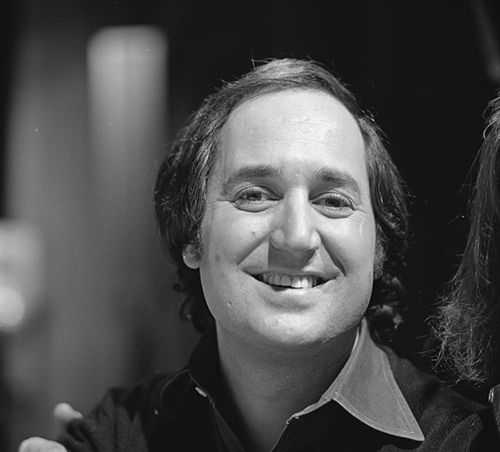
Neil Sedaka has one of those rare careers that feels woven into the fabric of pop music itself. His songs sparkle with melody, wit and heart, and for classic hits radio listeners, his voice is like a familiar friend arriving right on cue. Behind those bright, unforgettable records is a musician with deep training, a songwriter’s instinct for everyday emotion, and a remarkable ability to reinvent himself without losing what made him special in the first place.
From Brooklyn piano student to pop hopeful
Born in Brooklyn, New York, in 1939, Neil Sedaka grew up in a household where music mattered. His mother recognised his gift early and reportedly saved money for piano lessons by working extra hard, a detail that says a great deal about the determination surrounding his childhood. Sedaka was not simply a teenager who liked records. He was a serious young musician, trained in classical piano and accepted into the prestigious Juilliard School of Music’s preparatory division.
That grounding stayed with him forever. Even when he was writing bright, compact pop songs for the radio, there was often a craftsman’s precision underneath the surface. He understood melody, structure and dynamics in a way that gave his songs both immediacy and staying power.
As a teenager, he also discovered the thrill of popular music and vocal harmony. He became a member of a group called the Tokens, who would later score a major hit with The Lion Sleeps Tonight. For Sedaka, those early years were a perfect meeting point between discipline and excitement: classical study by day, pop dreams by night.
Just as important was his meeting with lyricist Howard Greenfield. The two began writing together while still very young, and their partnership would become one of the most fruitful in pop. Sedaka had the gift for melody; Greenfield had a sharp ear for language, mood and memorable lines. Together, they developed songs that sounded effortless, even though they were carefully built.
Brill Building energy and the first big breakthrough
To understand Neil Sedaka’s rise, it helps to picture the bustling New York songwriting world of the late 1950s and early 1960s. This was the era of the Brill Building and nearby music offices, where songwriters, publishers and producers worked at an astonishing pace. Hits could begin as a piano idea in the morning and be on their way to becoming standards before long.
Sedaka and Greenfield fit right into that world. Before Sedaka became a star in his own right, the pair were already writing songs for others. One of their early triumphs was Stupid Cupid, a hit for Connie Francis. That success proved they were not merely talented youngsters. They were professionals with real chart instincts.
Sedaka’s own breakthrough as a recording artist came with Oh! Carol in 1959, a record bursting with youthful charm and a bouncing rhythm that made it impossible to ignore. There is a lovely story behind it too: the song was inspired by Carole King, who had been a friend of Sedaka’s from school days. In true pop-world fashion, King and her husband Gerry Goffin answered with the playful song Oh! Neil. It was a reminder that this hit-making scene was not only competitive but also full of personal connections and musical conversation.
Oh! Carol established Sedaka as more than a songwriter behind the curtain. He had the voice, the personality and the presence to carry his own records. Soon, more hits followed, and they came in a dazzling run.
The songs that made him unforgettable
If you tune into classic hits radio and hear Neil Sedaka, chances are you will instantly recognise the tune within seconds. That is one of his great strengths: he wrote songs with hooks that land quickly and stay for life.
Among his most famous recordings are:
- Calendar Girl – a joyous, clever song that turns the months of the year into a romantic countdown
- Happy Birthday Sweet Sixteen – one of his signature early hits, full of teenage longing and innocence
- Breaking Up Is Hard to Do – perhaps his most famous song, and one of pop’s most quoted titles
- Little Devil – playful, catchy and full of youthful energy
- Next Door to an Angel – a perfect example of his polished early 1960s pop sound
- Laughter in the Rain – a smooth, warm 1970s comeback hit that showed his style could mature beautifully
- Bad Blood – a punchier, bigger-sounding hit from his comeback years
- Solitaire – a dramatic, emotionally rich song later made famous by other artists as well
Breaking Up Is Hard to Do deserves special attention because it tells such a wonderful story about Sedaka’s versatility. The original 1962 version is upbeat, almost deceptively cheerful, with its famous nonsense-syllable opening and bright arrangement. Then, years later, Sedaka re-recorded it as a slower, more reflective ballad. Remarkably, that version became a hit too. Few artists can claim to have taken the same song to the charts in two strikingly different styles, and it says a lot about the strength of the writing.
That ability to combine catchy surfaces with emotional truth is at the heart of his catalogue. Even his lightest songs are built with care. Even his saddest songs can carry a melodic lift that makes them radio gold.
A changing music scene and a remarkable comeback
Like many pop stars of the early 1960s, Sedaka faced a difficult period when musical tastes changed dramatically in the middle of the decade. The British Invasion reshaped the charts, and many established American teen idols found themselves pushed aside. For some, that would have been the end of the story.
For Neil Sedaka, it was a turning point.
Instead of disappearing, he adapted. He continued writing, broadened his musical approach and found success internationally before returning to major prominence in the United States. During this period, he worked with new collaborators, including lyricist Phil Cody, and developed a more mature sound.
His 1970s comeback is one of the most satisfying in pop history. Supported in part by admirers such as Elton John, who signed Sedaka to his Rocket label in the United States, Sedaka returned to the charts with renewed confidence. Laughter in the Rain became a major hit, and it remains one of those records that instantly changes the mood when it comes on the radio. It is tender, elegant and deeply melodic, with a grown-up romantic warmth that suited Sedaka perfectly.
Then came Bad Blood, a song with more drive and bite, showing that he could still sound contemporary while remaining unmistakably himself. Around the same period, songs like The Immigrant and Solitaire added depth and seriousness to his catalogue.
This second act matters because it was not a nostalgia run. It was a genuine creative revival. Sedaka proved he was not trapped in one era. He was a songwriter and performer with the tools to evolve.
The craft behind the charm
What makes a Neil Sedaka song sound like a Neil Sedaka song? First, there is melody. He has a gift for writing lines that feel natural and memorable, often with a graceful rise and fall that reflects his piano background. His songs are rarely clumsy or overstuffed. They move with confidence.
Then there is his voice: clear, youthful in its early years, warm and expressive as it matured. He could sound playful without becoming frivolous, and emotional without tipping into melodrama. That balance made him ideal for radio.
His arrangements also deserve praise. Early records often had a bright, polished energy with crisp rhythms and a clean pop sheen. Later recordings opened up into richer textures, especially in ballads. Through all of it, the songs remained central. Sedaka never lost sight of the tune.
There is also a theatrical quality in some of his work, a sense that he understood how to deliver a line for maximum feeling. That may be one reason so many of his songs have endured beyond their original chart life. Other artists could record them, audiences could sing them, and they still held together.
“Breaking up is hard to do” is more than a hit title. It is the kind of plainspoken emotional truth that great pop writing lives on.
Lesser-known details and behind-the-scenes moments
One of the most appealing things about Sedaka’s story is how often it overlaps with other giants of popular music. His friendship with Carole King is one example. His place in the New York songwriting world put him in the orbit of extraordinary talent at exactly the right moment.
Another fascinating detail is just how strong his formal musical education was. Many listeners know him as a pop craftsman, but fewer realise that he had serious classical ambitions as a young pianist. That training gave him a technical foundation that many rock and pop performers of the era did not have.
He also became known as a songwriter whose work travelled well. His songs were recorded by a wide range of artists, and his catalogue found new life in different voices and different decades. That is often the mark of a truly durable writer: the songs do not depend entirely on one arrangement or one moment in fashion.
There is a lovely resilience to his career too. Sedaka has spoken over the years about persistence, reinvention and belief in melody. Those themes are not just interview material; they are written into the shape of his life in music. He experienced the rush of early fame, the uncertainty of changing times, and the rare pleasure of a major comeback.
Why Neil Sedaka still belongs on classic hits radio
For classic hits radio listeners today, Neil Sedaka matters because he represents something timeless about pop at its best. His records are tuneful, concise and emotionally direct. They remind us that a great song does not need gimmicks. It needs a strong melody, a memorable lyric and a performance that feels human.
He also brings range to the radio dial. A Sedaka set can move from the fizzy delight of Calendar Girl to the wistful pull of Laughter in the Rain without losing coherence. He captures both the innocence of early pop and the sophistication of later singer-songwriters.
For listeners who grew up with these songs, there is the joy of recognition. For younger audiences discovering him for the first time, there is the pleasure of hearing where so much later pop craftsmanship came from. His influence can be felt in generations of songwriters who value melody, structure and emotional clarity.
Most of all, Neil Sedaka endures because his music still feels alive. These are not museum pieces. They are records that brighten a drive, stir a memory and invite a singalong before the chorus has even fully arrived.
That is a rare gift. And in the world of classic hits, it is exactly why Neil Sedaka’s songs keep coming back around.