
Lost in Love — the soaring story of Air Supply
From a chance meeting in a stage production to a remarkable run of romantic radio classics, Air Supply built a legacy on melody, emotion, and unforgettable vocals. Their songs still float effortlessly across the airwaves, bringing memories with every chorus.
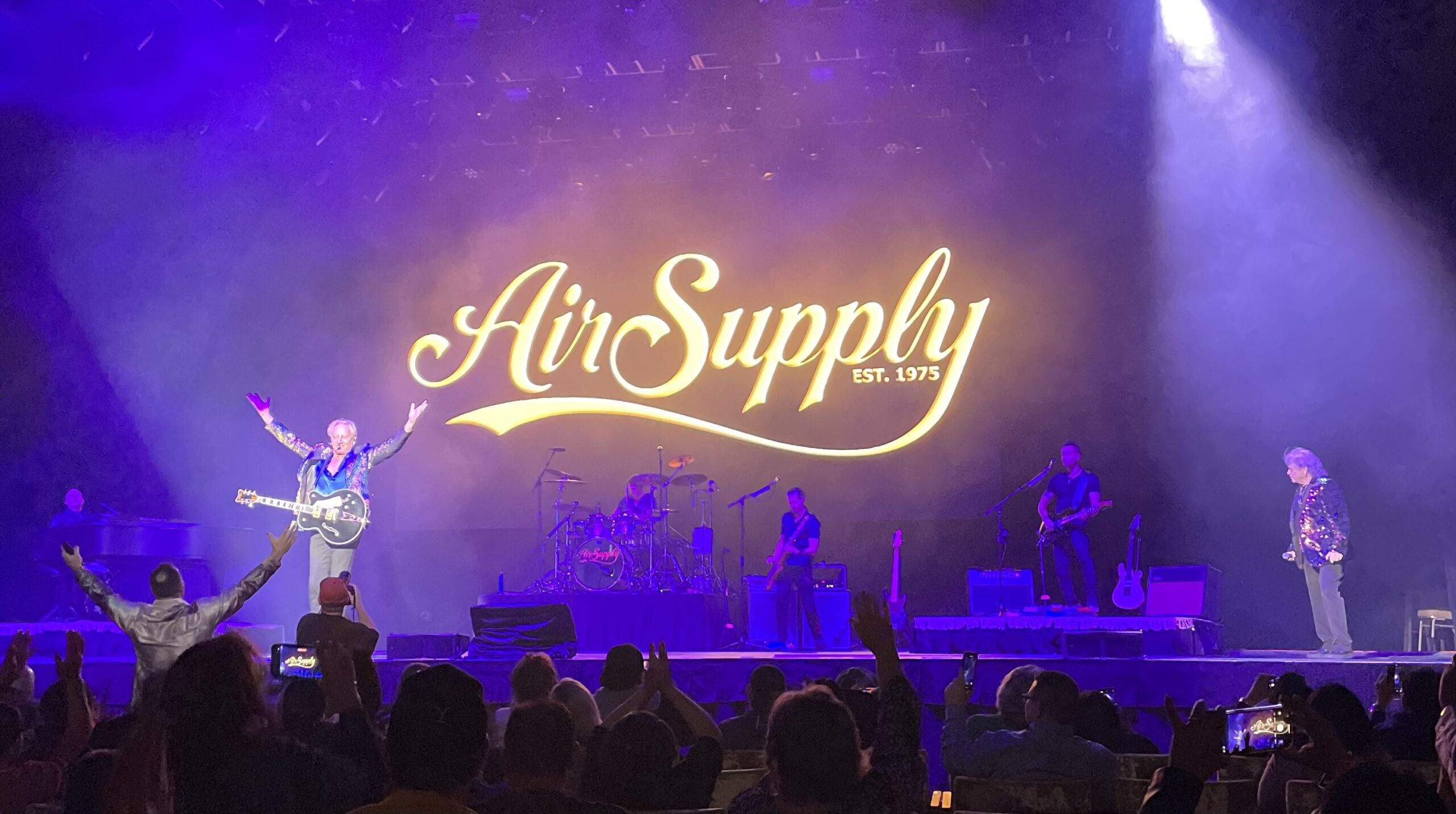
There are some voices that seem to arrive on a breeze. Put on an Air Supply record and you can feel it almost instantly: the lift of a piano line, the sweep of strings, and then that unmistakable blend of Russell Hitchcock’s powerful tenor and Graham Russell’s tender songwriting. For many classic hits listeners, Air Supply are more than a soft rock duo. They are a time machine back to slow dances, late-night dedications, car radios glowing in the dark, and songs that wore their hearts proudly on their sleeves.
Behind those grand choruses and emotional ballads is a story that is both unlikely and wonderfully human: two performers meeting in a stage production, finding a musical chemistry that could not be ignored, and building one of the most recognisable songbooks of the late 1970s and early 1980s. Their music was romantic, yes, but it was also crafted with discipline, melodic instinct, and a deep understanding of what makes a song stay with people for decades.
From the stage to the charts
Air Supply began in Australia in 1975, but the roots of the duo stretch back to two very different early lives. Graham Russell was born in Nottingham, England, and grew up with a love of music that was shaped by melody-driven songwriting. He was especially drawn to the emotional directness of artists who could say a great deal with a simple, elegant tune. Russell’s instinct was always to write, to look for the line or phrase that could unlock a whole song.
Russell Hitchcock, born in Melbourne, Australia, brought something equally essential: a remarkable voice. Even in his early years, music was a natural outlet, and he developed the kind of soaring tenor that could turn a heartfelt lyric into a dramatic moment. If Graham Russell was the architect of many Air Supply songs, Hitchcock was often the voice that gave them flight.
The two met while performing in the Australian production of Jesus Christ Superstar. It is one of those classic music-history moments that feels almost cinematic. In the middle of a busy theatrical environment, amid rehearsals and performances, they discovered a shared love of harmony, melody, and emotionally rich songs. They began singing together between shows, and before long the partnership had a name: Air Supply.
The choice of name has always stood out. It is slightly mysterious, a little dreamy, and somehow fitting for music that often feels full of atmosphere and open sky. In those early days, the duo worked hard on the live circuit, building a following through persistence and a growing catalogue of songs that balanced intimacy with big-pop ambition.
How the breakthrough really happened
Success did not arrive all at once. Air Supply first found attention in Australia with songs including Love and Other Bruises, which helped establish them as a promising act. But the truly major breakthrough came a few years later, and it changed everything.
That turning point was Lost in Love. Released in 1980, the song became a major international hit and introduced Air Supply to a much wider audience, especially in the United States. It is hard to overstate how important that record was. It had all the ingredients that would become their signature: a heartfelt lyric, a polished arrangement, and a vocal performance that felt both vulnerable and huge. It did not just climb the charts; it announced that Air Supply had found their lane and were about to own it.
What followed was an extraordinary run. Working with producer Clive Davis, who had a sharp ear for songs with broad appeal, Air Supply refined their sound into something radio programmers loved and listeners remembered. They became hitmakers at a time when radio still had the power to turn a song into a shared cultural event. Their records sounded grand without losing their emotional core, and that balance made them perfect for both pop charts and adult contemporary playlists.
For classic hits fans, this is part of the magic. Air Supply were not simply chasing trends. They were delivering songs that felt timeless even when they were brand new.
The songs that made hearts stop for a moment
If Air Supply have a musical calling card, it is surely the run of beloved hits they released in the late 1970s and early 1980s. These are not just successful singles. They are songs that people remember where they were when they first heard them.
- Lost in Love — The breakthrough ballad, tender and dramatic in equal measure. It remains one of the duo’s defining songs and a masterclass in emotional pop songwriting.
- All Out of Love — Perhaps their most famous recording, this song is pure Air Supply: aching, melodic, and delivered with complete conviction. Its opening lines are instantly recognisable, and its chorus still has the power to fill a room.
- Every Woman in the World — A romantic anthem with a graceful melody and a polished arrangement that captured their crossover appeal.
- The One That You Love — A number one hit in the United States, and a perfect example of how Air Supply could make longing sound elegant rather than heavy.
- Making Love Out of Nothing at All — Written by Jim Steinman, this later classic brought a more dramatic, almost cinematic intensity to their catalogue. It is enormous, emotional, and impossible to ignore.
- Here I Am — Warm, reassuring, and deeply melodic, this song became another favourite among fans and radio audiences alike.
- Sweet Dreams and Even the Nights Are Better — Two more reminders of how consistently the duo could deliver songs that connected.
There is a special quality to these records. They are unabashedly romantic, but never careless. The arrangements are carefully built, the harmonies are precise, and the emotional pacing is expertly handled. Air Supply knew how to let a song breathe before lifting it into a chorus that felt almost weightless.
“All Out of Love” was reportedly intended by Graham Russell as a song about reaching out and trying to repair a relationship, not simply a song of heartbreak. That emotional nuance may be one reason it has lasted so well.
A style built on melody, emotion, and lift
Air Supply are often described as soft rock, and that label is certainly part of the story. But it does not quite capture the full picture. Their music sits at a crossroads of pop, adult contemporary, orchestral balladry, and singer-songwriter craft. At the heart of it all is melody.
Graham Russell’s songwriting has always leaned toward clarity and feeling. He understood that a simple phrase, if matched with the right chord change, could hit with tremendous force. Russell Hitchcock, meanwhile, had one of the era’s most distinctive voices: bright, soaring, and capable of sounding powerful without losing tenderness. That combination became their trademark.
There is also a theatrical quality to Air Supply, which makes perfect sense given their origin story. Their songs often rise and swell like scenes in a musical. You can hear the sense of drama in the arrangements, but also in the way the vocals are staged. A verse draws you close; the chorus opens the curtains wide.
That style influenced many artists who followed, especially in adult contemporary and romantic pop. You can hear echoes of Air Supply in later power ballads, in the careful build of many radio love songs, and in the idea that sincerity itself can be a strength. At their best, Air Supply made emotional directness feel not old-fashioned, but brave.
Behind the scenes: stories, surprises, and staying power
One of the more impressive facts about Air Supply is their longevity. Many acts have a hot streak; far fewer keep performing, recording, and connecting with audiences across generations. Air Supply have done exactly that, maintaining a devoted fan base and touring widely for decades.
Part of that endurance comes down to the partnership itself. Like many long-running musical relationships, theirs has required patience, trust, and a clear understanding of what each person brings. Russell the writer and Hitchcock the vocalist is a simple summary, but of course it goes deeper than that. Both have been guardians of the Air Supply identity, preserving the emotional honesty and melodic richness that made the duo special in the first place.
There are also some delightful lesser-known details in their story. Before their biggest international success, they spent years developing their act and learning what worked in front of an audience. That stage experience mattered. It gave their songs discipline. Even their biggest ballads have structure and control; they know exactly when to hold back and when to let loose.
Another interesting twist is the role of Making Love Out of Nothing at All in their legacy. Written by Jim Steinman, famous for his larger-than-life dramatic style, the song was not penned by Graham Russell, yet Air Supply made it completely their own. Hitchcock’s vocal performance is one of the great showcases in their catalogue, and the track proved they could thrive not only with their own material but also with songs from other major writers.
Russell Hitchcock once noted that the songs have endured because people attach their own memories to them. That may be the secret of Air Supply: the records become part of people’s lives.
Why Air Supply still matter on classic hits radio
Classic hits radio is built on songs that do more than trigger recognition. The best records bring feeling with them. Air Supply do that every time. Their music instantly sets a mood, whether it is romance, nostalgia, comfort, or the bittersweet glow of remembering who you once were.
For listeners today, Air Supply represent an era when melody mattered deeply, when singers were allowed to sound vulnerable, and when a ballad could be every bit as powerful as a rock anthem. Their songs offer contrast in a playlist, too. Between louder, faster records, an Air Supply hit can arrive like a deep breath: elegant, emotional, and unforgettable.
They also speak across generations. Long-time fans hear the original magic, while younger listeners often discover that these songs still work beautifully in any era. A great chorus does not age. A sincere performance never goes out of style. And when Russell Hitchcock reaches for one of those sky-high notes, it still feels like the room gets a little bigger.
That is why Air Supply belong in the classic hits conversation. They remind us that pop music can be gentle without being slight, emotional without being excessive, and popular without losing its craft. Their records are beautifully made, instantly recognisable, and tied to real memories for millions of listeners.
The lasting glow of a great duo
Air Supply’s story is one of chemistry, craftsmanship, and conviction. Two performers met in a theatre production, discovered a rare musical connection, and went on to create some of the most enduring love songs of their era. Along the way they gave radio a string of unforgettable hits, gave fans songs for weddings and heartbreaks and quiet nights, and proved that tenderness can have enormous power.
Listen again to Lost in Love, All Out of Love, or The One That You Love, and you can hear why the music lasts. It is in the writing, the vocals, the lift of the arrangements, and the complete sincerity at the centre of it all. Air Supply never sounded embarrassed by emotion. They leaned into it, and that honesty is exactly what still connects.
For classic hits radio listeners, that means Air Supply are not simply a nostalgic memory. They are a living part of the format’s heart: artists whose songs still arrive with grace, warmth, and that unmistakable sense of being carried somewhere just a little higher.