Todd Rundgren — the studio wizard with a pop heart
Why do we still play Todd Rundgren? Because few artists could pack so much heart, melody, and studio magic into a three-minute song, while quietly shaping some of rock’s biggest records behind the scenes.
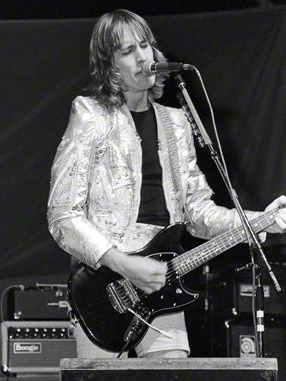
Why does Todd Rundgren still feel like a secret hiding in plain sight? For many listeners, he is the voice behind a handful of unforgettable songs. But step a little closer and you find one of popular music’s great all-round talents: singer, songwriter, guitarist, producer, studio experimenter, bandleader, and restless musical adventurer.
He is the kind of artist classic hits radio was built to celebrate. The hooks are there, the emotion is there, and behind it all is a musician who never stopped searching for a fresh sound. Rundgren could write a tender ballad that felt like a late-night confession, then turn around and build a sparkling pop record packed with harmonies, wit, and technical daring. That mix of heart and curiosity is exactly why his music still lands so beautifully today.
Philadelphia beginnings and a fast education in music
Todd Rundgren was born in Philadelphia, Pennsylvania, in 1948 and grew up in the nearby suburb of Upper Darby. Music grabbed him early. Like many young musicians of the 1960s, he was electrified by rock and roll, British beat groups, soul, and the rapidly expanding possibilities of pop. But even as a teenager, he was not simply trying to copy records he loved. He was listening closely to how they were made.
That detail matters, because Rundgren’s story is not only about performance. It is also about the studio. He became fascinated by arrangement, recording, and the way a song could be transformed by sound design. In other words, he was learning the craft behind the curtain while many others were still focused on the spotlight.
His first major step came with the psychedelic rock group Nazz in the late 1960s. The band developed a cult following and showed off Rundgren’s gift for melody and ambition. Even then, he was writing songs that reached beyond straightforward garage rock. There was drama in them, colour in them, and a sense that he wanted pop music to be both catchy and adventurous.
Nazz never became a giant commercial force, but it was an important training ground. Rundgren sharpened his songwriting, developed confidence as a guitarist and vocalist, and began to understand what kind of artist he wanted to be. Just as importantly, he saw the limits of band politics and started moving toward a career where he could control more of the creative process.
Breaking through with songs that stuck for life
If there is one thing Todd Rundgren understood deeply, it was how to write a song that feels personal and immediate. His early solo work quickly announced that he was no ordinary singer-songwriter. He had emotion, yes, but he also had a playful streak and a producer’s ear for texture.
The breakthrough came with Something/Anything? in 1972, an album that remains one of the great statements of the era. It is often celebrated not just for its songs, but for the astonishing fact that Rundgren played most of the instruments himself on large parts of it. That alone tells you plenty about his drive and his skill. He was not waiting for the perfect band or the perfect conditions. He could hear the record in his head and build it himself.
That album delivered some of his best-loved songs, including Hello It’s Me and I Saw the Light. Both are now deeply woven into the fabric of classic hits radio, and for good reason.
- Hello It’s Me has that bittersweet warmth that never goes out of style. It sounds intimate, almost conversational, yet beautifully polished. The melody lingers, and Rundgren’s vocal carries a tenderness that feels completely unforced.
- I Saw the Light is pure pop craftsmanship. Bright, melodic, and instantly inviting, it has the kind of effortless charm that makes listeners turn up the volume the moment it begins.
Then there is Can We Still Be Friends, one of his most emotionally resonant songs. It is graceful, wounded, and generous all at once, a song about heartbreak that avoids bitterness and reaches instead for dignity. That emotional intelligence is one of Rundgren’s signatures. He could write about love without turning sentimental, and about pain without losing elegance.
Another fan favourite, Bang the Drum All Day, revealed a different side of him entirely. Cheerful, loose, and impossible not to smile at, it became a party anthem and a sports-event staple. It also reminded everyone that Rundgren had a sense of humour. He was never trapped by the idea that serious musicians had to be solemn.
A musician who heard the whole picture
One of the most fascinating things about Todd Rundgren is that he was never just making records as a singer. He was shaping them as an architect of sound. That made him enormously important behind the scenes as well.
As a producer, Rundgren worked with a wide range of artists and left a strong mark on the sound of 1970s rock and pop. He produced albums for acts including Badfinger, Grand Funk Railroad, and Meat Loaf. His work on Meat Loaf’s Bat Out of Hell is especially legendary. That album is huge, theatrical, dramatic, and gloriously over the top. It became one of the best-selling albums in history, and Rundgren’s ability to bring order, power, and momentum to such an ambitious project was a major part of its success.
There is a wonderful irony in that story. Rundgren, often associated with smart, finely crafted pop and studio precision, helped create one of rock’s grandest excesses. But that is exactly what made him special. He understood songs from the inside out. He knew how to make them connect, whether the setting was intimate or explosive.
He also formed the band Utopia, which gave him another outlet for progressive rock, elaborate arrangements, and experimental ideas. Utopia allowed Rundgren to stretch further into musicianship and technology, exploring sounds and structures beyond the limits of radio singles. Yet even at his most adventurous, he rarely lost his melodic instinct.
“I’ve always just followed my curiosity.”
That idea sums him up beautifully, whether or not you are talking about a direct quote or the spirit of his career. Curiosity is the thread running through everything he did.
The songs listeners hold closest
Ask a room full of classic hits fans for their favourite Todd Rundgren song and you will likely get a wonderfully mixed answer. That is one sign of a lasting artist: the catalogue means different things to different people.
For some, it is Hello It’s Me, a song that feels like a memory the first time you hear it. For others, it is I Saw the Light, because few records capture that breezy, sunlit pop magic so perfectly. Many listeners have a special place for Can We Still Be Friends, especially because it has been rediscovered by younger generations through film, television, and cover versions.
Then there are the deeper cuts and cult favourites that longtime fans treasure, such as We Gotta Get You a Woman, Love Is the Answer, and It Wouldn’t Have Made Any Difference. These songs show the range of Rundgren’s writing: romantic, reflective, playful, and sometimes quietly devastating.
One reason these songs endure is that they are built so well. The melodies are strong, the arrangements are thoughtful, and the emotional tone is clear without being heavy-handed. They reward casual listening on the radio, but they also open up further when you sit with them.
Style without walls
Trying to pin down Todd Rundgren’s musical style is part of the fun, because he refused to stay in one lane. At different moments he moved through pop, rock, blue-eyed soul, progressive rock, power pop, psychedelic textures, and early electronic experimentation. He could sound polished and warm on one track, eccentric and futuristic on the next.
Yet there is a common thread. Rundgren’s music usually carries three things: a strong melodic centre, a love of arrangement, and a willingness to take risks. He admired classic songcraft, but he also embraced new tools and new ideas. Long before it became common, he was interested in technology’s role in music-making, video, and interactive media.
That forward-looking side helped make him influential among musicians who valued independence and creative control. He showed that an artist could be both commercially accessible and deeply experimental. You did not have to choose one or the other.
His influence can be heard in generations of pop craftsmen, studio obsessives, and genre-blending artists. Musicians who care about harmony, production detail, and the freedom to follow unusual ideas owe something to the path Rundgren helped clear.
Lesser-known stories that make him even more interesting
One of the most impressive facts about Rundgren is just how much he could do on his own in the studio. In an age when recording was far less flexible than it is now, that took serious discipline and imagination. He was effectively building records piece by piece, often acting as the band, producer, arranger, and sonic director all at once.
He also earned a reputation as an early adopter of new technology. Rundgren was interested in computers, video, and digital possibilities long before they became everyday tools in music. That made him something of a bridge figure: rooted in the golden age of classic pop songwriting, but always peering ahead at what might come next.
Another revealing detail is the respect he earned from fellow musicians. Artists did not turn to Rundgren only because he had hits. They turned to him because he could solve problems, hear possibilities, and bring shape to ambitious ideas. That kind of trust says a lot.
And then there is his stage presence. Rundgren could be warm, eccentric, funny, and unpredictable. He never projected the polished distance of a star who wanted to remain mysterious. Instead, he often came across like a brilliant musical guide inviting the audience into his workshop.
Why Todd Rundgren still belongs on classic hits radio
Classic hits radio is about more than nostalgia. At its best, it reminds us why certain records stay alive. Todd Rundgren matters because his songs still deliver that immediate spark: a great opening line, a melody that lifts, a chorus that settles into the memory almost instantly.
But he matters for another reason too. He represents the rich, adventurous side of popular music. He reminds listeners that the classic era was not built only by obvious superstars. It was also shaped by gifted craftsmen and fearless originals who expanded what a pop song could be.
When a Todd Rundgren song comes on the radio, it often brings a little extra texture with it. There is the pleasure of recognition, of course, but there is also the sense that you are hearing someone who truly loved making records. You can hear the care in the harmonies, the playfulness in the arrangement, the intelligence in the structure.
For longtime fans, that is part of the joy. For newer listeners, he can still feel like a discovery. And perhaps that is the perfect Todd Rundgren experience: familiar enough to sing along with, surprising enough to make you lean in closer.
A lasting glow
Todd Rundgren’s legacy is not limited to chart positions or famous credits, though he has plenty of both. His real legacy is the example he set: follow the song, trust your ears, stay curious, and do not be afraid to colour outside the lines.
That is why his music continues to glow on classic hits radio. The songs are warm, human, smart, and full of life. They carry the craftsmanship of a master and the enthusiasm of someone who never lost the thrill of discovery.
In the end, Todd Rundgren is more than a hitmaker or a cult hero. He is one of those rare figures who make popular music feel bigger, brighter, and more interesting. And every time one of his records spins across the airwaves, that spark comes back to life.