When Music Learned to Look Back at You
Why do so many classic hits arrive with pictures already playing in your mind? MTV changed more than television — it gave a generation of songs a face, a style, and a lasting place in pop culture.
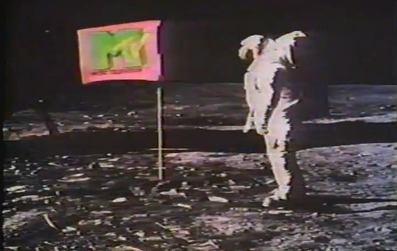
There was a time when hearing your favourite song on the radio felt magical enough. Then suddenly, in the early hours of 1 August 1981, television gave pop music a face, a fashion sense, a storyline, and a whole new kind of electricity. MTV arrived with a bold promise: music television. It sounded simple, but it changed the business, the stars, and the way audiences connected with songs forever.
For listeners who grew up with classic hits, it is hard to overstate the thrill. A song you already loved could now come with a moonwalk, a leather jacket, a windswept cliff, a neon-lit club, or a cinematic mini-drama. Suddenly, music was not just something you heard in the car, at home, or through headphones. It became something you watched, remembered, copied, and talked about the next day.
The day the screen lit up
MTV launched in the United States with a line that became instantly famous: “Ladies and gentlemen, rock and roll.” The first video played was The Buggles’ Video Killed the Radio Star, which was almost too perfect. It felt cheeky, futuristic, and just a little provocative, as if the channel were announcing a cultural handover in real time.
Of course, radio did not disappear. Not even close. If anything, MTV and radio pushed each other. Radio still broke records, built loyal audiences, and gave songs their daily life. MTV added another layer: image. Together, they turned hit songs into full-scale events.
In those early years, the videos could be charmingly rough around the edges. Some looked like low-budget art projects. Others felt like concert clips with extra smoke machines. But even then, something important had shifted. Artists were no longer judged only by how they sounded. They were now expected to create a visual world too.
Why that mattered so much
Before MTV, many fans knew artists mainly through album covers, magazine photos, and live performances. That left plenty to the imagination. MTV changed the relationship overnight. Viewers could see how a singer moved, what a band wore, how they played to the camera, and whether they had that hard-to-define star quality that made you stop mid-conversation and stare at the screen.
It was not just promotion. It was identity-building on a massive scale.
Suddenly, image became part of the hit
Some artists were made for this new world. Duran Duran, for example, understood early that a video could feel glamorous, exotic, and cinematic. Their clips looked like postcards from a more exciting universe: yachts, tropical locations, stylish clothes, mysterious glances. The songs were already catchy, but MTV made them feel larger than life.
Then there was Madonna, who mastered the visual side of pop with fearless intelligence. She did not just release songs; she unveiled eras. Every look, gesture, and video seemed to say something about reinvention, confidence, and control. On MTV, that translated brilliantly.
And of course, there was Michael Jackson.
The moment videos became events
If MTV opened the door, Michael Jackson kicked it off the hinges. Billie Jean, Beat It, and especially Thriller showed that a music video could be more than a marketing tool. It could be a cultural phenomenon.
Thriller was a short film, a dance spectacle, and a pop masterpiece all at once. It had suspense, choreography, makeup effects, and one of the most unforgettable group dance scenes ever put on screen. People did not just watch it. They waited for it, talked about it, imitated it, and replayed it in their minds for years.
That was the turning point. After that, videos were not optional extras for major artists. They were central to the story.
MTV did not simply help songs become hits. It helped hits become myths.
A new stage for style, attitude, and personality
One of MTV’s greatest powers was its ability to turn details into signatures. A pair of lace gloves. A red leather jacket. A headband. A dance move. A glance into the camera. These things became part of pop history because viewers saw them again and again.
For artists like Prince, Cyndi Lauper, George Michael, Tina Turner, and Eurythmics, MTV provided a stage where individuality could shine in vivid colour. Annie Lennox’s striking androgynous image, Tina Turner’s fierce energy, and Cyndi Lauper’s playful, rule-breaking style all landed with extra force because audiences could see them as well as hear them.
This visual language spread fast. Hairstyles changed. Fashion trends moved from videos into schools, clubs, shopping centres, and bedrooms with posters on the wall. Fans copied dance routines, outfits, and attitudes. Pop stars did not just influence playlists anymore. They influenced everyday life.
It changed the music business too
Once MTV proved its power, record labels adjusted quickly. Budgets for videos grew. Directors became stars in their own right. Concepts became more ambitious. A great video could lift a song, sharpen an artist’s image, and open the door to a wider audience.
That had enormous consequences:
- Marketing became more visual — songs were sold with memorable imagery as much as with melodies.
- Artists needed screen presence — charisma on camera became a valuable asset.
- Global appeal increased — a striking video could communicate across language and cultural barriers.
- Bigger risks brought bigger rewards — innovative videos could turn an artist into a household name.
There was a downside, of course. Not every brilliant musician fit the visual demands of the era, and not every artist had equal access to the budgets and support needed to compete. MTV could be thrilling, but it also raised the pressure. Looking the part became more important than ever, sometimes unfairly so.
Even so, the creative explosion it sparked is impossible to ignore. Directors experimented with storytelling, animation, editing tricks, surreal imagery, and performance styles that influenced advertising, film, fashion photography, and television itself.
The stars of classic hits found a new kind of immortality
One reason MTV still matters so much on classic hits radio is simple: it helped burn songs into memory. When you hear A-ha’s Take On Me, many listeners instantly picture that pencil-sketch world. Hear Peter Gabriel’s Sledgehammer, and the stop-motion wizardry comes rushing back. Put on Bonnie Tyler’s Total Eclipse of the Heart, and suddenly it feels dramatic enough to fill a cathedral.
That is the special magic of the MTV era. The songs live in your ears, but the images live right beside them.
Videos that became part of the song
Some clips became so iconic that it is almost impossible to separate them from the music itself:
- A-ha — Take On Me: a groundbreaking blend of live action and animation that still feels inventive.
- Peter Gabriel — Sledgehammer: playful, surreal, and packed with visual imagination.
- Dire Straits — Money for Nothing: a landmark in early computer animation.
- Madonna — Like a Prayer: bold, controversial, and unforgettable.
- Robert Palmer — Addicted to Love: sleek, stylish, and instantly recognisable.
These were not just videos people happened to see once. They became part of popular culture, referenced and remembered decades later.
MTV also changed how we discovered music
There was something wonderfully unpredictable about the early MTV experience. You might tune in hoping to catch one favourite and end up discovering three more. A new band could appear between established superstars, and if the video was striking enough, you were hooked.
That sense of discovery mattered. It gave audiences a curated stream of music that felt exciting and communal. Everyone was seeing the same things, sharing the same moments, and building the same cultural memory bank. The next day, people talked about what they had watched the way earlier generations talked about a live television event.
For radio listeners, that crossover was powerful. You heard the song on air, then saw the video after school or late at night, and the connection deepened. The track became more familiar, more personal, more alive.
Its legacy never really went away
MTV changed over the years, and the media world moved on. The internet, YouTube, streaming, and social platforms transformed music discovery again. But the basic idea MTV popularised is still everywhere: songs are experiences, and visuals matter.
Today, artists launch singles with teaser clips, carefully designed imagery, dance challenges, and mini-movies. They are all working in a world that MTV helped create. The tools are different, but the principle is the same. People do not just want to hear the music. They want to see the universe around it.
That is why the channel’s influence still echoes so strongly through the classic hits era. It gave many of the biggest songs of the 1980s and 1990s their permanent visual identity. It turned performers into icons and videos into cultural landmarks.
Why classic hits still carry that spark
When a classic hit comes on today, it often brings a double memory. First, there is the sound: the opening drum fill, the guitar riff, the chorus you have known for years. Then comes the picture: the dance, the outfit, the dramatic lighting, the black-and-white close-up, the desert road, the city skyline at night.
That is MTV’s great legacy. It taught music how to live in two places at once: in the ear and in the imagination.
And for those of us who still love these songs, that is something worth celebrating. Because long after the first broadcast, long after the logos and the VJs and the countdown shows, the best of the MTV era still feels electric. Press play on a classic hit, and chances are, somewhere in your mind, the video starts rolling too.